
25 Mar WHEN THE SYSTEM CAN’T SEE, IT CAN’T PREVENT: THE ONGOING CHALLENGE OF INEFFICIENCY IN MEDICAID
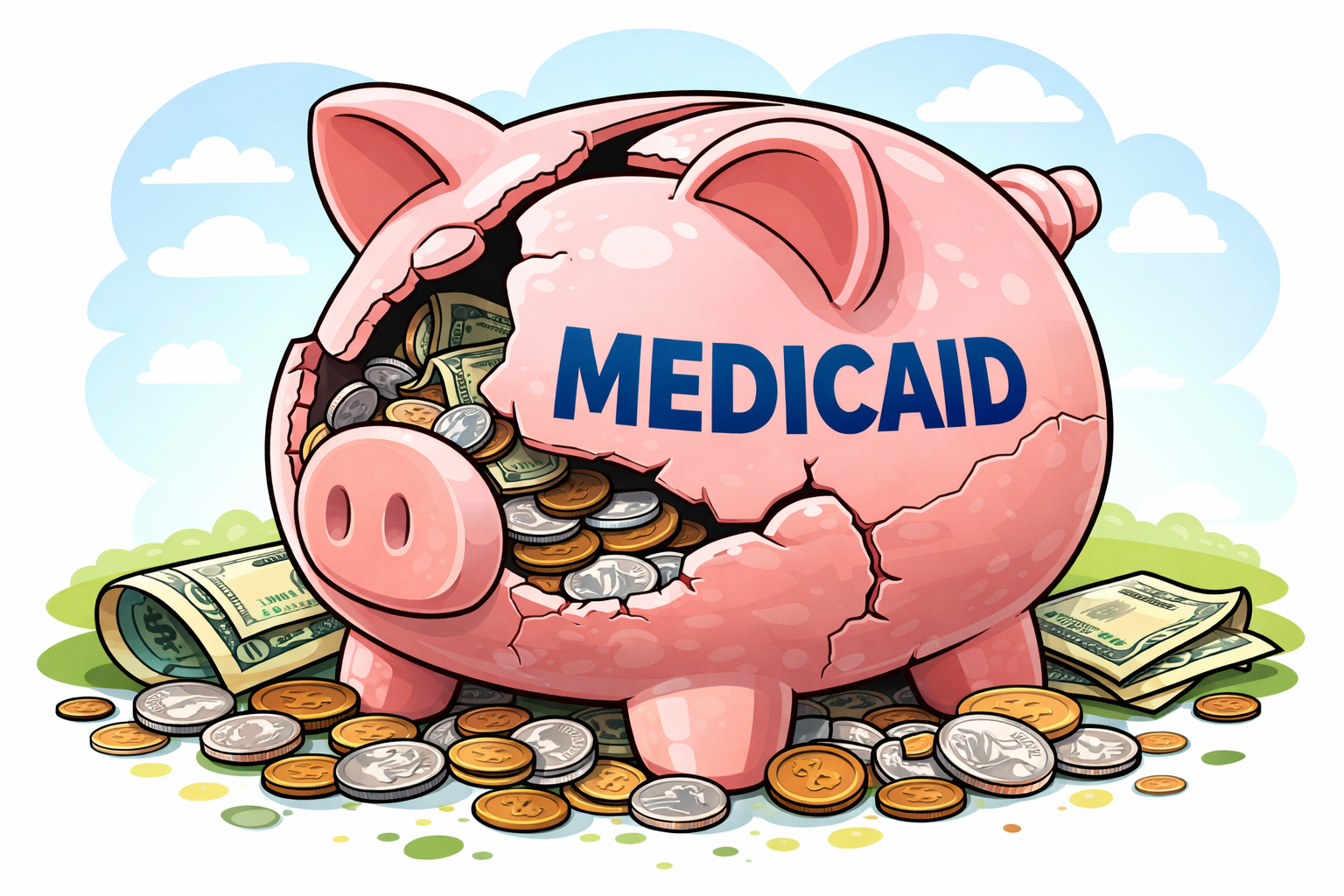
Medicaid has evolved into a critical safety net, providing healthcare coverage to millions of Americans who rely on it for access to essential services. As the program has expanded in both size and complexity, so too has the challenge of ensuring that every dollar is spent correctly. Despite continued oversight, fraud, waste, and administrative inefficiencies remain a persistent drain on program resources—diverting funding away from patient care and into preventable loss.
Fraud, often highlighted in enforcement actions and headlines, involves intentional efforts to secure payments that are not justified. Examples include billing for services that were never performed or misrepresenting the type of care delivered. While these cases are serious, they represent only a portion of the overall issue. Most improper payments occur not because of deliberate misconduct, but because the system lacks the information needed to make accurate decisions in real time.
Medicaid operates in a constantly shifting environment. Beneficiary eligibility can change frequently due to income fluctuations, employment changes, or life events. At the same time, individuals may obtain additional insurance coverage that is not immediately known to Medicaid. These overlapping and evolving coverage scenarios create complexity that must be managed accurately at the moment a claim is processed.
The problem is that Medicaid systems are often working with incomplete or outdated data. Eligibility and third-party liability information may reflect conditions from weeks or months earlier, rather than the current reality. When this happens, Medicaid cannot fully determine whether it is the correct payer. As a result, claims may be approved that should have been denied, adjusted, or paid by another entity.
These visibility gaps are not simply the result of oversight—they are built into the structure of the system. Many of Medicaid’s core processes were designed in an era when the program was smaller, less dynamic, and less interconnected. Data exchanges were slower, eligibility changes were less frequent, and coordination across multiple payers was not as critical as it is today.
In the modern healthcare environment, those assumptions no longer hold. Medicaid must now operate across a fragmented ecosystem of providers, health plans, and commercial insurers, all while managing rapidly changing eligibility conditions. Yet many administrative processes still rely on delayed updates, batch data transfers, and manual verification steps. This creates a fundamental mismatch between how the program operates and the speed at which real-world changes occur.
The consequences are both financial and operational. Improper payments reduce the resources available to support care, forcing states to manage increasing demand with constrained budgets. Over time, this can limit the ability to expand services, invest in innovation, or maintain critical programs. At the same time, increased scrutiny from federal oversight bodies places additional pressure on states to improve accuracy and accountability.
Traditional approaches to program integrity have focused on detecting problems after they occur. Audits, investigations, and recovery efforts are designed to identify improper payments and recoup funds where possible. However, this approach addresses symptoms rather than causes. By the time an issue is identified, the payment has already been made, and recovery efforts may yield only partial results.
A more effective strategy begins with visibility. If Medicaid programs can access accurate, real-time information about eligibility and other coverage, they can prevent improper payments before they happen. This requires modernizing data flows, improving integration across systems, and enabling verification at the point of claim adjudication.
With real-time insight, Medicaid can ensure that the right payer is billed, that eligibility requirements are met, and that claims are processed correctly from the start. This not only reduces financial loss, but also streamlines operations and minimizes the need for costly post-payment corrections.
Ultimately, addressing fraud, abuse, and inefficiency in Medicaid is about closing the gap between what the system knows and what is actually happening in real time. When that gap exists, errors are inevitable. When it is closed, accuracy becomes the standard.
As Medicaid continues to grow and evolve, strengthening real-time visibility will be essential to protecting both program integrity and the care it provides.